Project Overview
This project focused on designing and prototyping a mechanical embosser capable of creating repeatable impressions on a target material. The design emphasized mechanical reliability, manufacturability, and ease of assembly.
Engineering Approach
The goal of this project was to develop a mechanism that could reliably emboss patterns while maintaining alignment, force transmission, and repeatability.
Key design considerations included:
- Consistent force application
- Mechanical alignment and tolerance control
- Compact mechanism packaging
Design Iteration
-
Problem definition and research
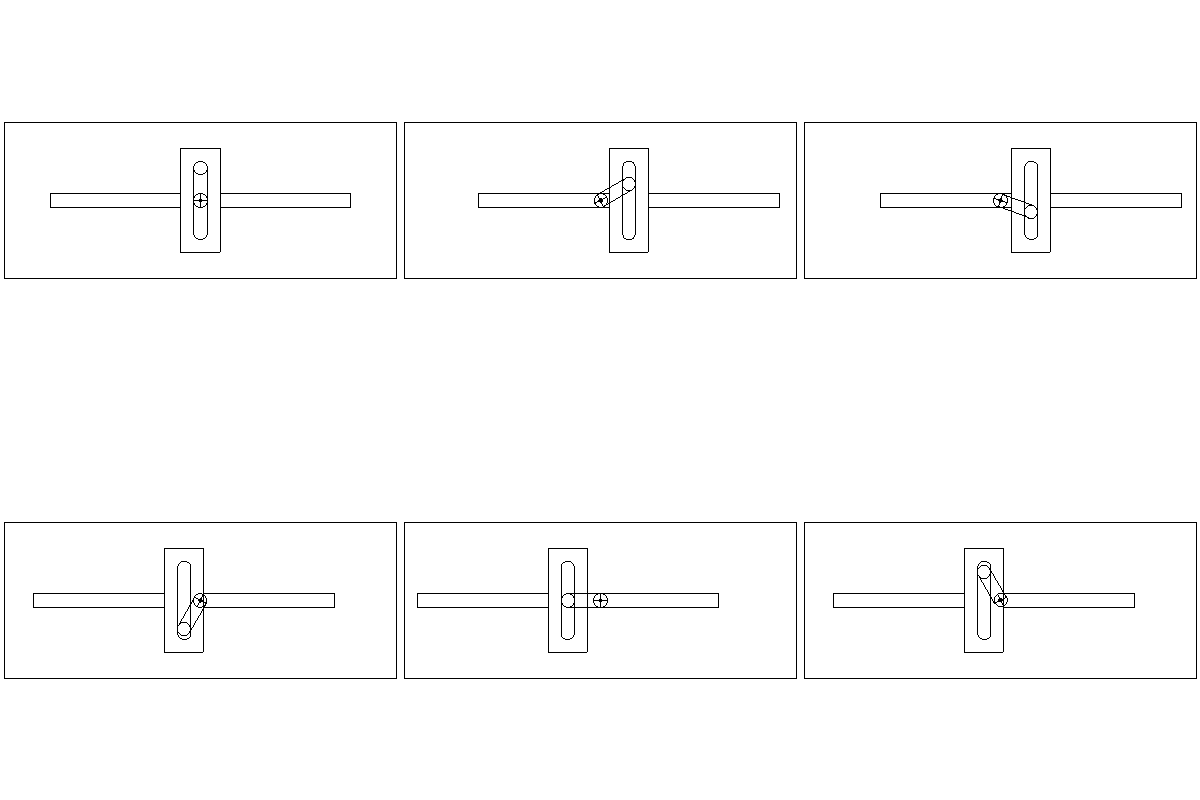
The objective of this project was to design and prototype a mechanical embosser using a required Scotch yoke mechanism to convert rotational motion into linear motion. The device needed to repeatedly emboss a target material while maintaining consistent motion, alignment, and mechanical reliability.
-
CAD design and mechanism development
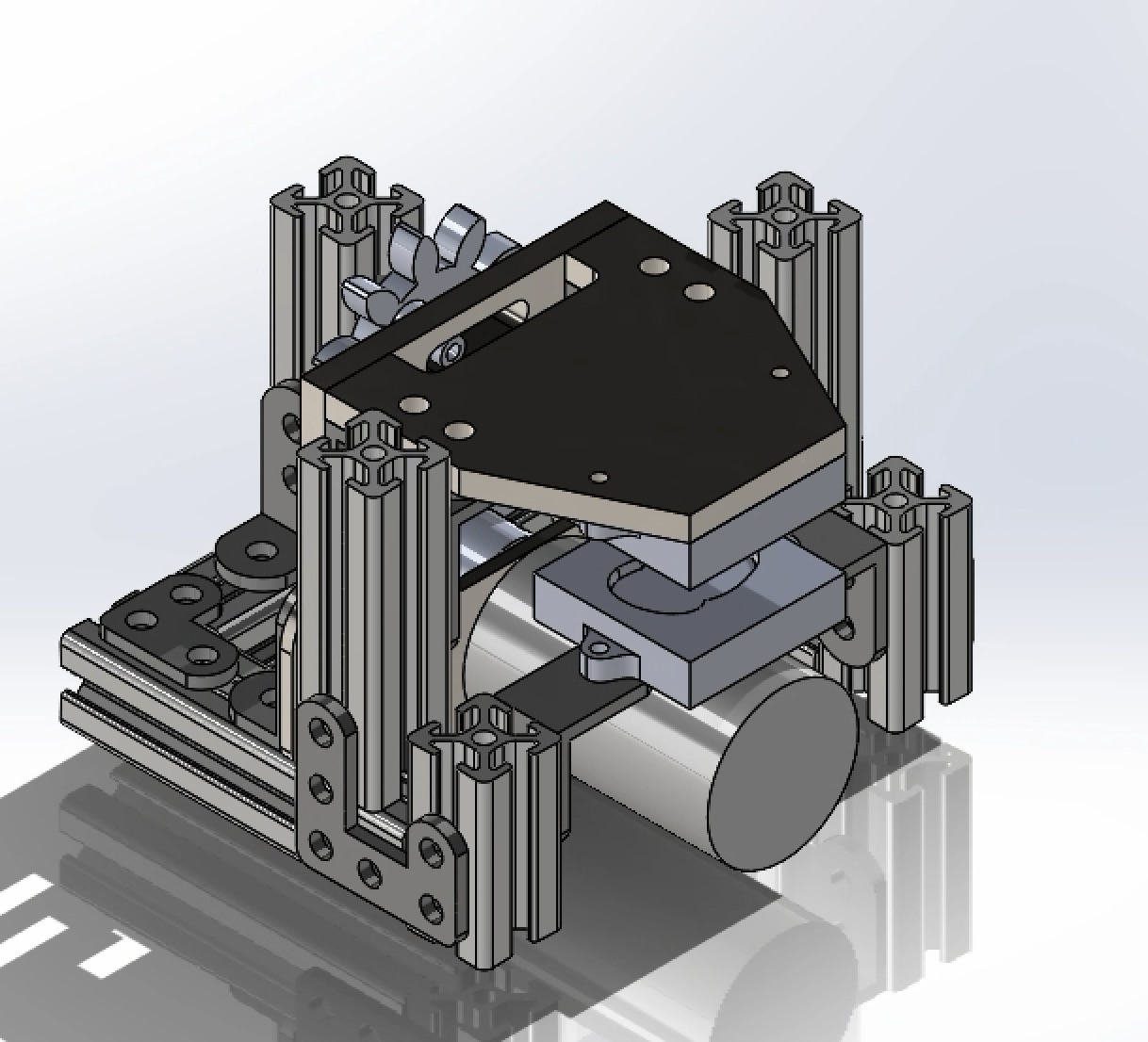
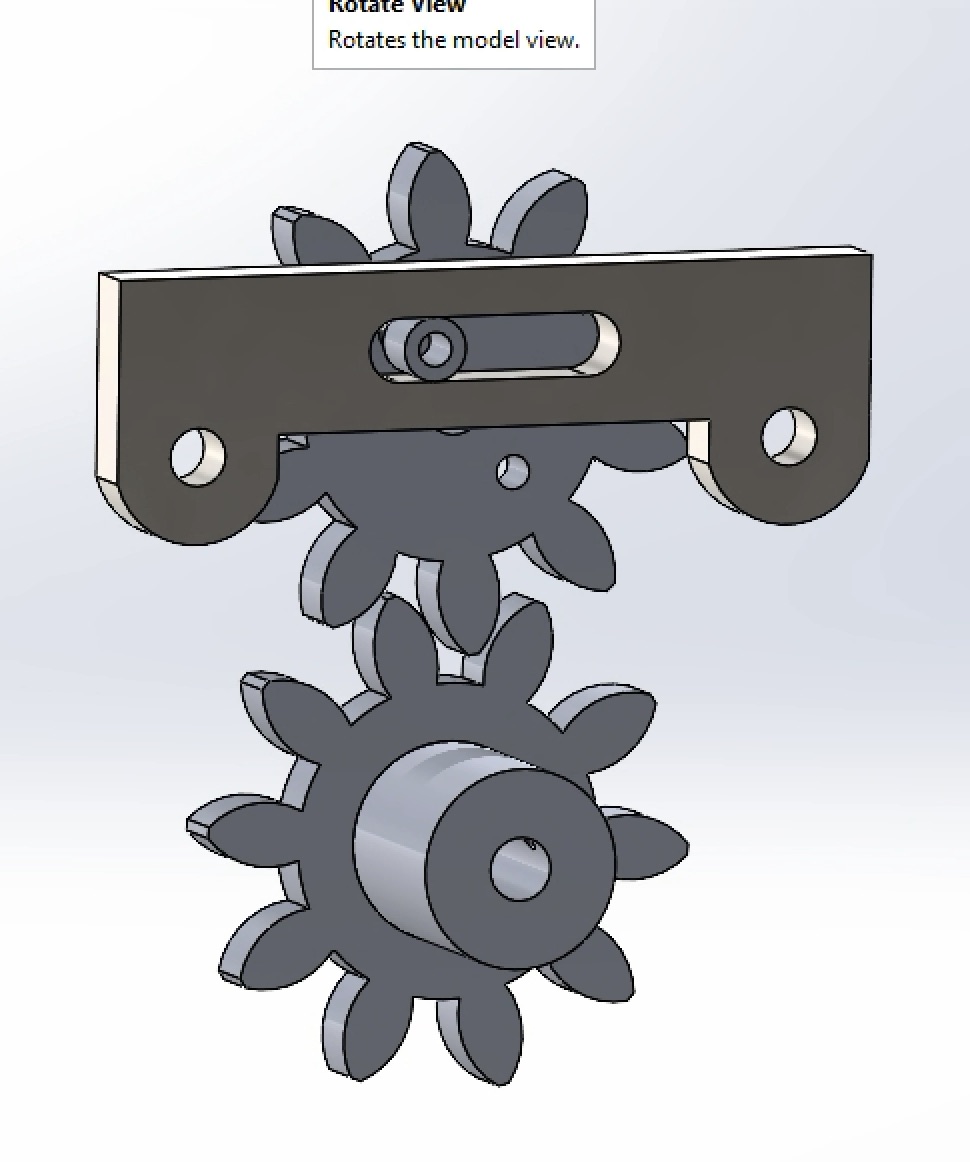
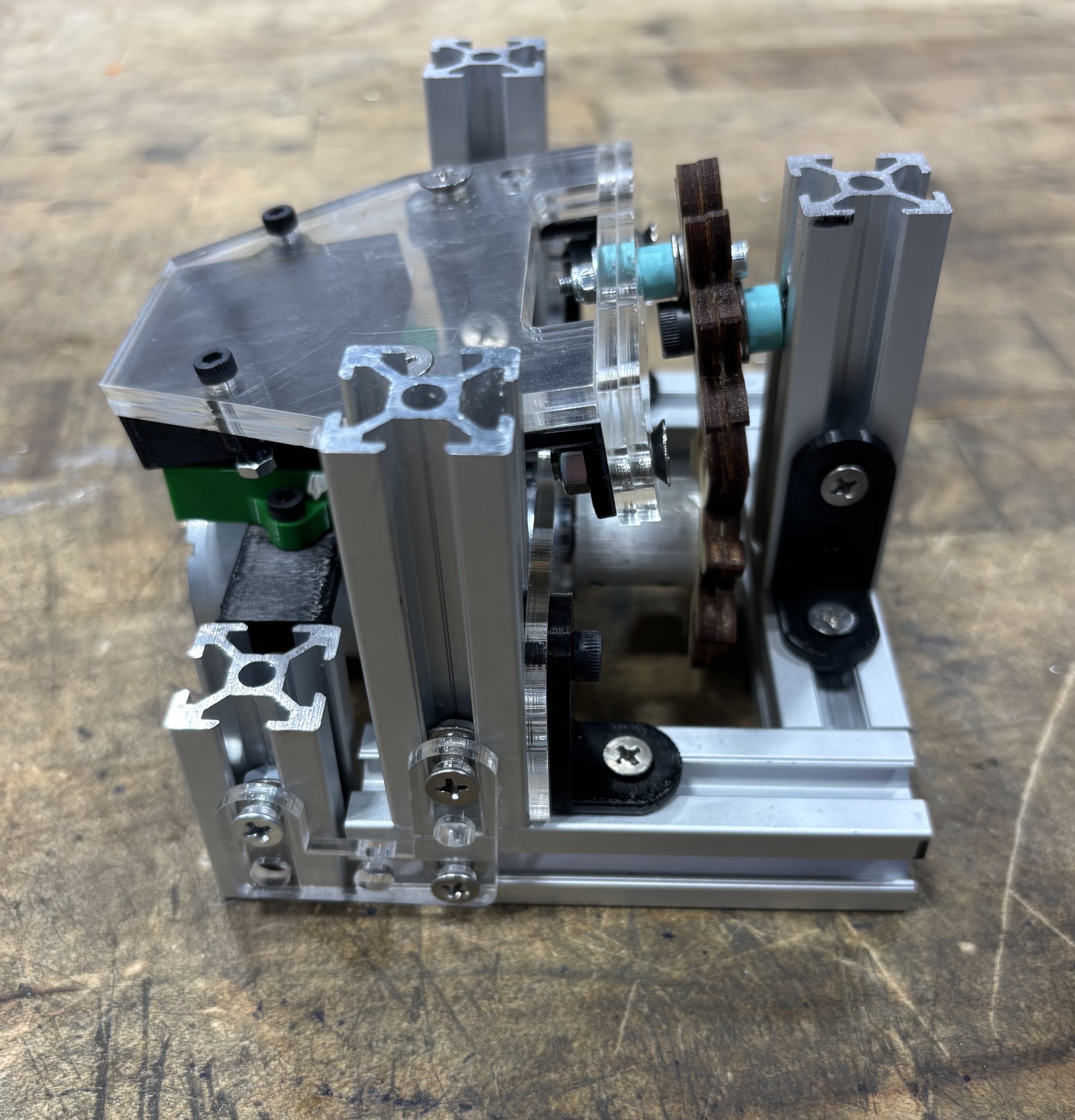
The goal of the design phase was to create a compact embosser mechanism. We utilized aluminum extrusions for the frame. Gears were 3D printed and brackets were laser cut from acrylic.
-
Prototyping and testing
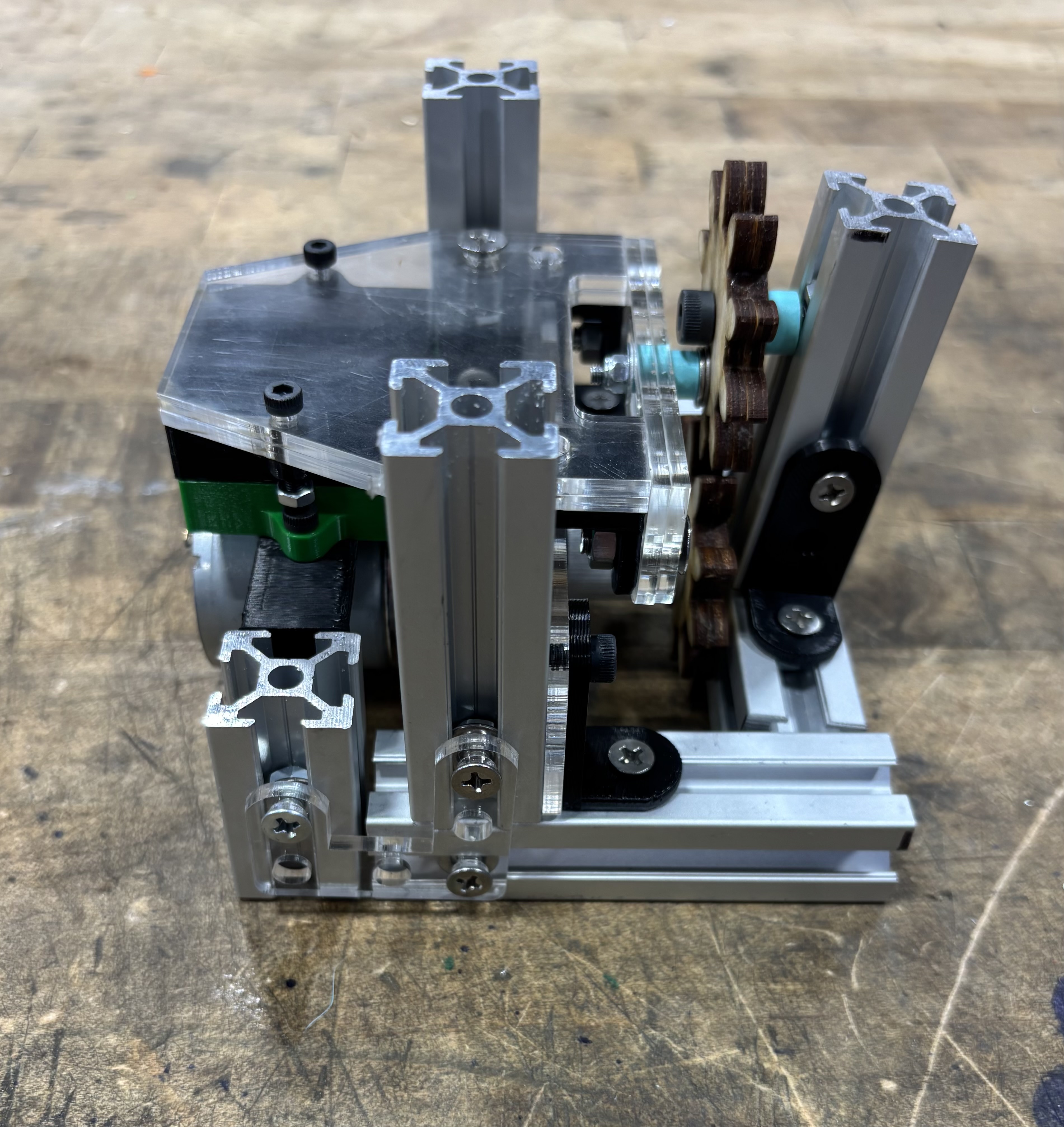
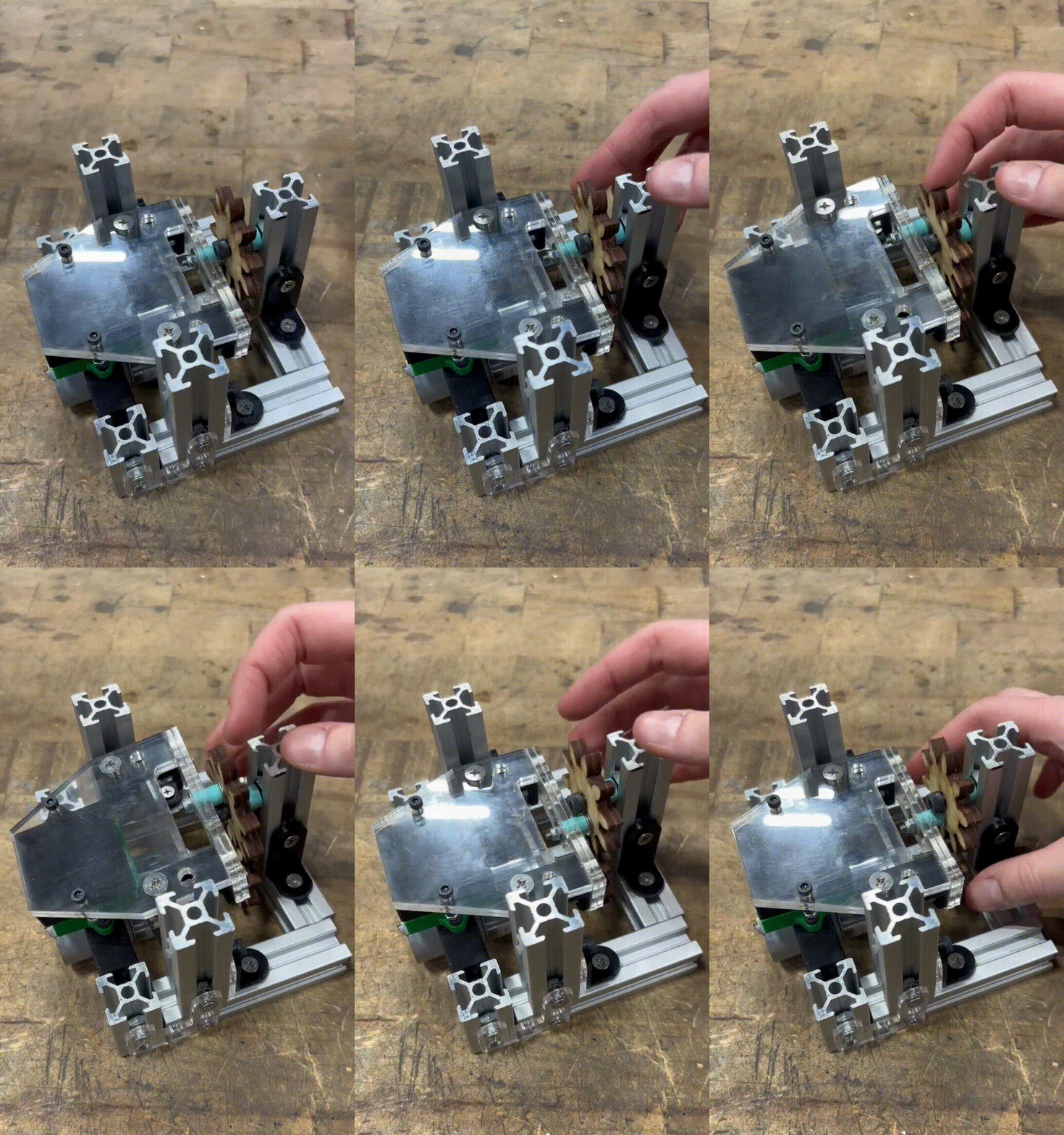
Once all the parts were 3D printed, laser cut, and machined, we assembled the prototype. Initial testing revealed issues with alignment.
-
Design iteration and improvements
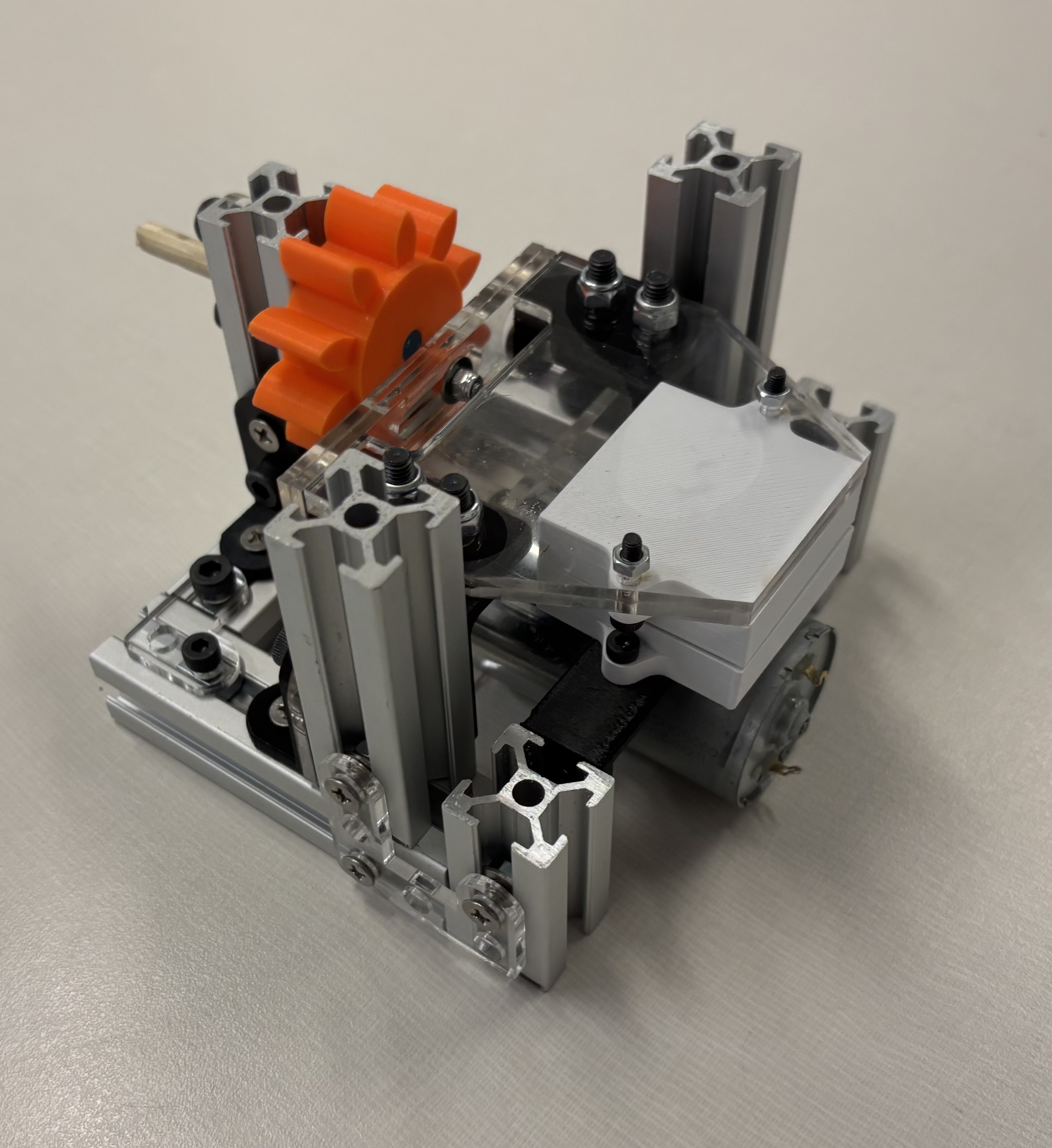
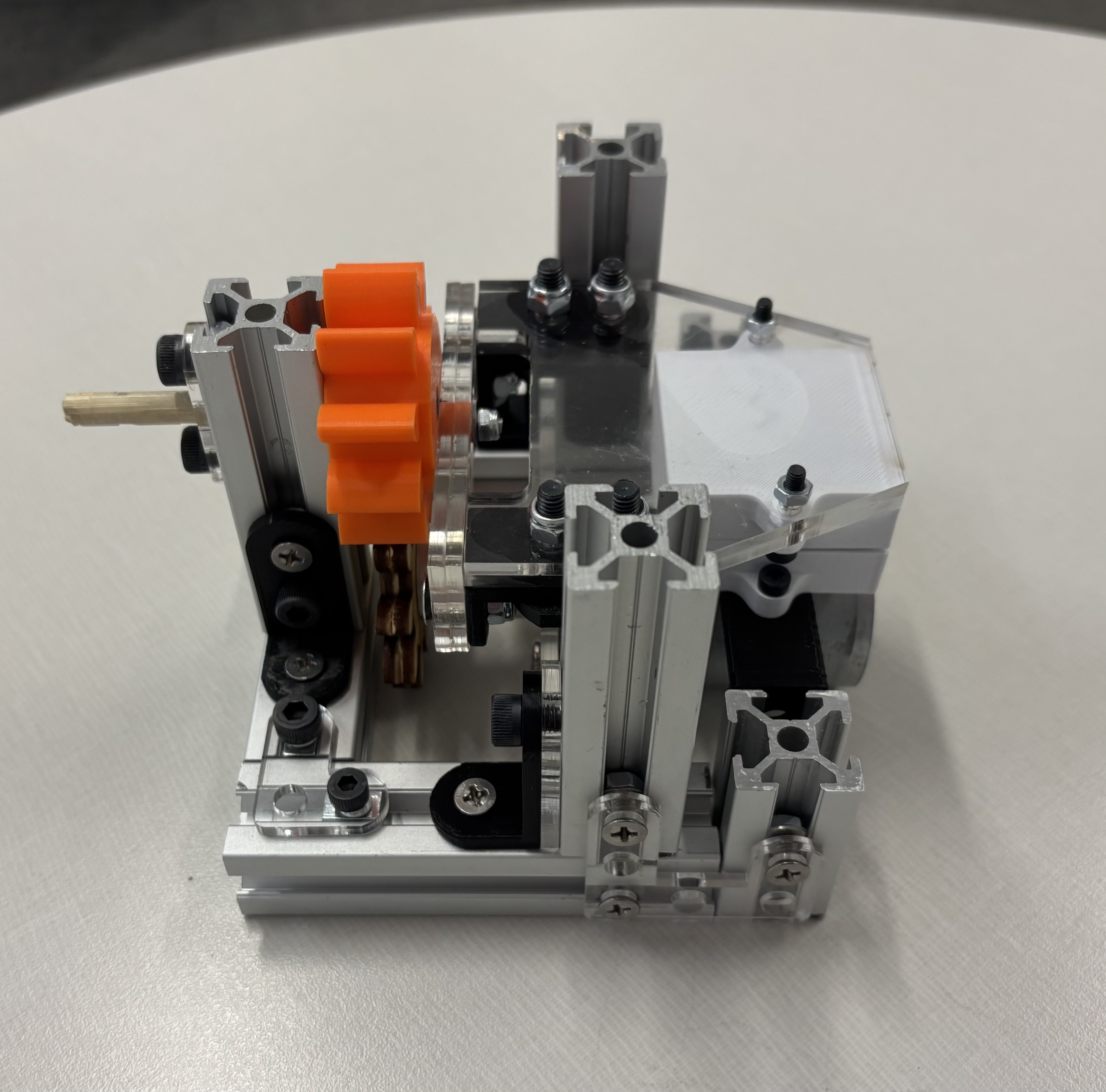
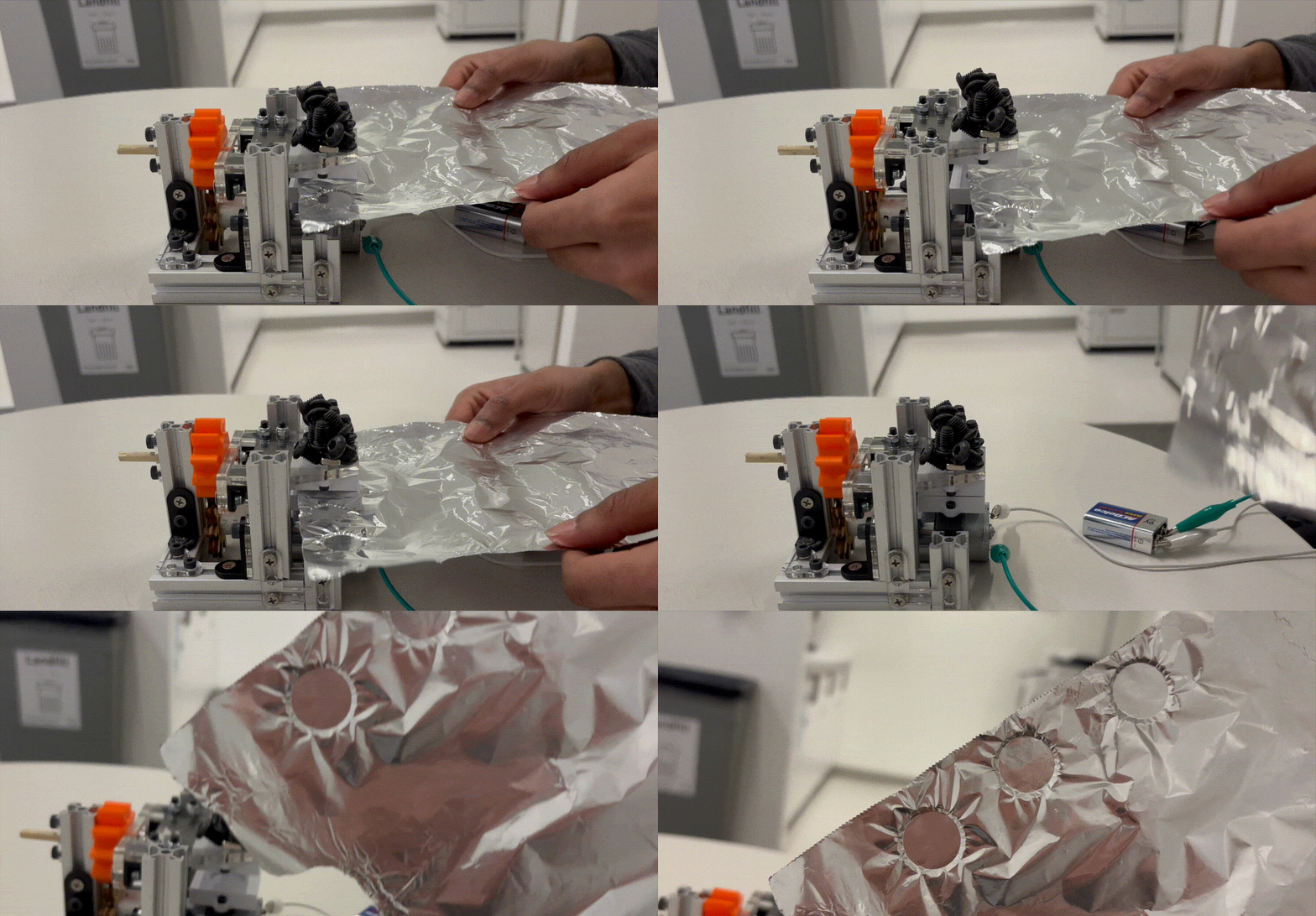
To improve the alignment, we iterated the design by changing the spacing in the gears, most significantly adding a hub to the yoke gear. Also, the material for the gears was changed from birch plywood to 3D printed PLA to improve the reduce friction in the gear teeth and between the gears and the scotch yoke. After these changes, the mechanism was able to operate without jamming and demonstrated repeatable embossing motion.
Key Engineering Challenges
- Designing a mechanism capable of repeatable embossing force
- Maintaining alignment between moving components
- Designing for ideal torque transmission.
- Managing tolerances in printed or machined components
Final Outcome
The final design demonstrated a functional embossing mechanism capable of repeatable operation while balancing mechanical performance, manufacturability, and compact packaging. If given further time, I would modify the gear ratio to increase the embossing force and reduce the speed of the mechanism. I had to supplement the lower torque output of the mechanism with added weight on top of the dies to produces a clearer embossing impression.
Through this project, I gained experience in mechanical system design, CAD assembly development, prototype iteration, tolerance management, and manufacturability considerations.
Skills Demonstrated
- Mechanical CAD design and assemblies
- Mechanism design and motion systems
- Design for manufacturability
- Prototype iteration and testing
- Tolerance and assembly considerations